What Is a Solar EPC Contractor and Why Does It Matter in Iraq?
For large entities like hotels, hospitals, factories, universities, government buildings, and commercial complexes, this single-contract model is not just convenient. It is the only model that makes commercial sense. A hotel that hires three separate companies for engineering, equipment supply, and installation creates coordination risk, warranty complexity, and accountability gaps that can delay a project by months and add cost at every junction.
When a single EPC contractor owns all three phases, the engineering is designed around the equipment that will actually be procured, the installation team knows the design intimately, and accountability for the system’s performance sits with one entity for the life of the warranty. In Iraq’s demanding climate, where summer temperatures exceed 50°C and dust storms can reduce panel efficiency by 25% without proper engineering, this integrated accountability is the difference between a system that performs for 25 years and one that fails in three.
The Three EPC Phases — What ZMC Solar Delivers on Every Commercial Project
Site Assessment & System Design
Full energy audit of your facility. Load analysis across all circuits. Digital twin of your building using precision software to model panel placement, shading from parapet walls and AC units, wind loading for desert conditions, and projected energy yield per month. System sizing in kW or MW matched exactly to your consumption profile — not a generic template.
Tier-1 Equipment Supply
ZMC Solar is the official Iraq distributor for Canadian Solar, itel, and DYQUE — all Tier-1 internationally certified brands. As a distributor with local warehouse stock in Baghdad and Erbil, we procure your project equipment from our own inventory. No import delays, no counterfeit risk, no supply chain uncertainty. Every component arrives certified, warranted, and ready for installation.
Installation & Commissioning
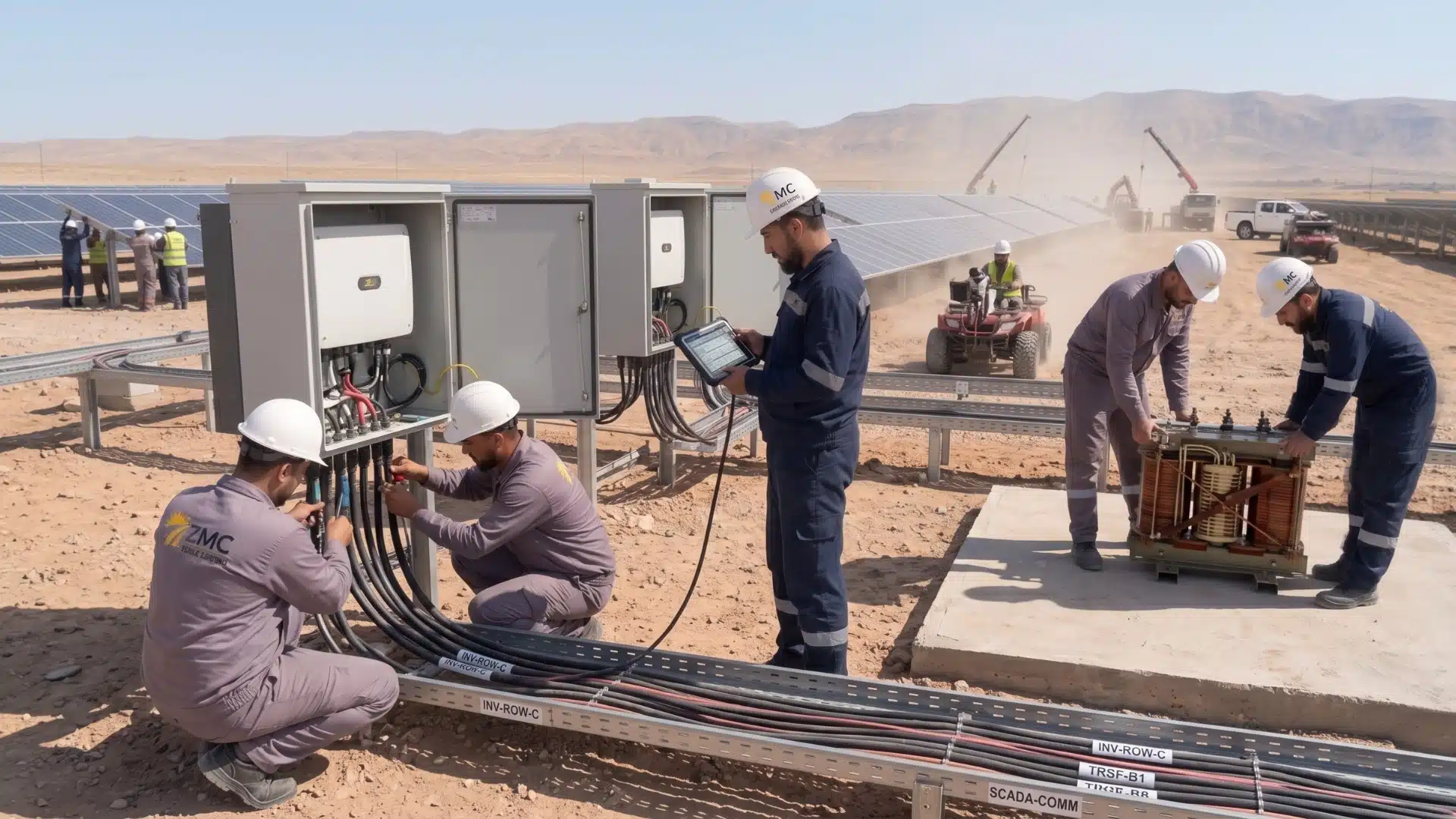
Structural mounting using hot-dip galvanised aluminium frames tilted at the optimum angle for Iraq's latitude. Double-insulated cabling that withstands UV and heat degradation. Inverter installation and battery storage integration. Full system commissioning with performance testing against projected yield. Handover with monitoring platform access so you can track output in real time from day one.
Commercial Sectors ZMC Solar Serves as EPC Contractor in Iraq
ZMC Solar has engineering experience across every major commercial and institutional sector in Iraq. The following entities have the most to gain from a full solar EPC programme because their electricity costs are highest, their operational continuity requirements are strictest, and their roof or ground area is large enough to accommodate systems that generate real payback.
Hotels & Resorts
24/7 AC, water heating, kitchen, and lighting loads make hotels one of Iraq's highest electricity consumers. Solar plus battery storage eliminates dependence on both the grid and generators, reducing operating cost and providing a genuine marketing differentiator to guests.
Hospitals & Clinics
Power continuity is non-negotiable in a hospital. A solar hybrid system with battery backup ensures ICUs, operating theatres, and life-critical equipment never depend on an unreliable grid or a generator that can run out of fuel. ZMC Solar designs hospital systems to zero-failure standards.
Factories & Manufacturing
Industrial electricity consumption is high and constant. Solar eliminates the production downtime that grid cuts cause and the fuel cost of running backup generators around the clock. Large roof areas on factory buildings make them ideal for high-capacity solar arrays.
Office Complexes & Commercial Towers
Daytime electricity demand from offices aligns perfectly with peak solar generation hours. Rooftop solar covers the majority of a commercial building's daytime load, reducing electricity costs by 60–80% during working hours.
Universities & Schools
Educational institutions operate on fixed budgets where generator fuel costs consume a disproportionate share of resources. Solar EPC projects for universities in Iraq free up operating budgets while providing a visible sustainability commitment to students, staff, and the community.
Malls & Retail Centres
Air conditioning is the dominant load in Iraqi retail, and the cost of generator fuel to run it is one of the largest operating expenses for mall operators. A rooftop solar system sized to the cooling load creates immediate and measurable monthly savings.
Warehouses & Logistics Facilities
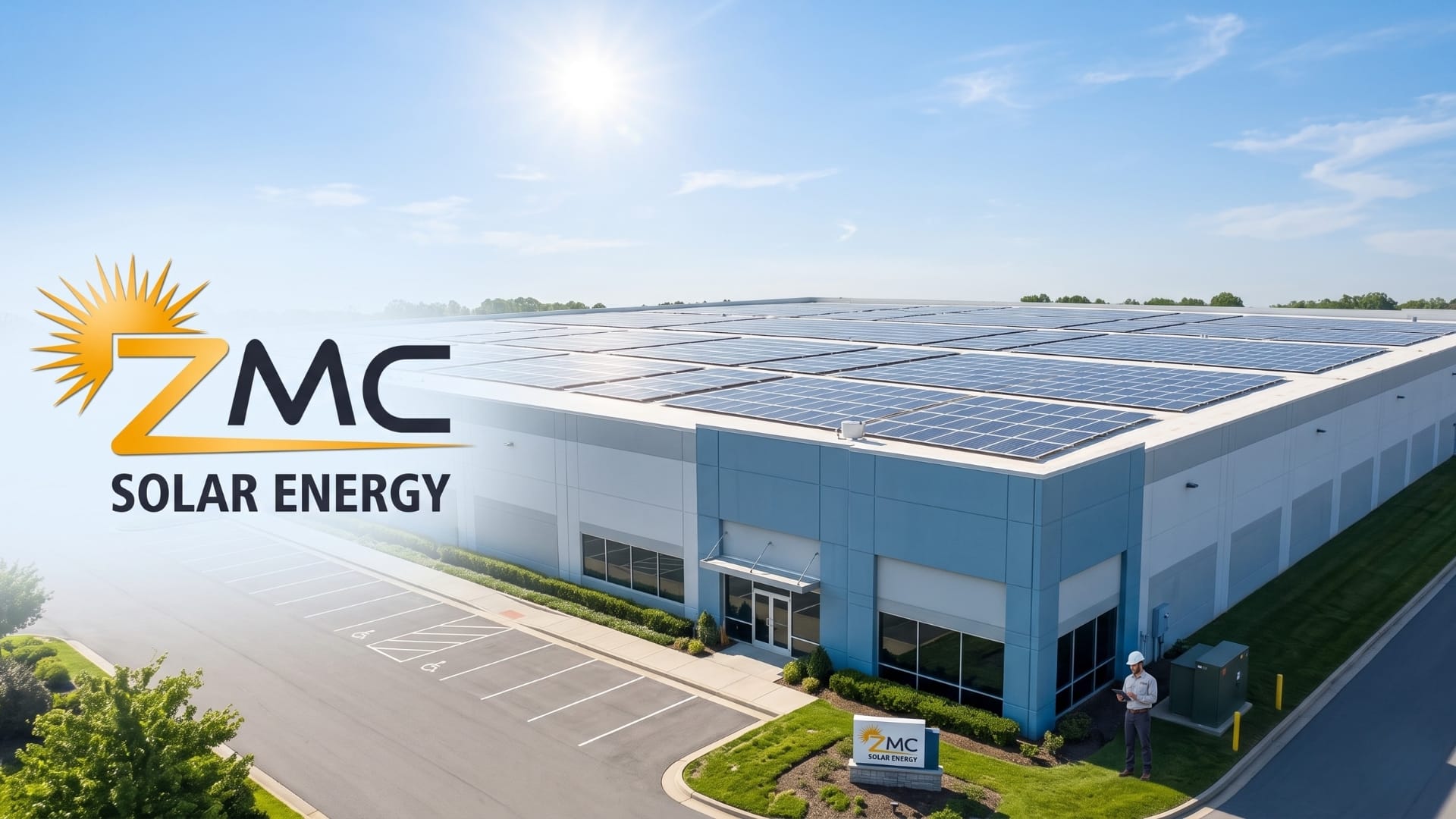
Large flat roofs, consistent daytime electricity consumption, and high generator dependency make warehouses one of the strongest ROI cases for solar in Iraq. ZMC Solar works with logistics companies across Baghdad, Basra, and Erbil.
Government Buildings & Ministries
Government entities in Iraq carry significant electricity costs across large facilities. Solar EPC projects align with Iraq's national target of 12 GW solar capacity by 2030 and qualify for Central Bank financing programmes specifically designed for institutional projects.
Why 2026 Is the Critical Year for Commercial Solar EPC in Iraq
Three structural changes converged in 2026 to create the strongest commercial case for solar investment Iraq has ever seen, and for large entities, the combination of these factors makes this the optimal window to commission an EPC project.
Import Tariffs Cut
The most significant single policy change for the Iraqi solar market in a decade. Before March 2026, importing solar panels and equipment into Iraq carried customs duties of up to 33%. The government reduced this to 5%, directly reducing the procurement cost of every commercial solar project. For a large commercial installation, this tariff reduction represents a meaningful reduction in project cost that flows directly into improving the payback period.
Central Bank Solar Loan Programme
The Central Bank of Iraq allocated 6 trillion Iraqi Dinars specifically for solar financing. Business loans are available through partner banks including Cihan Bank and Rasheed Bank, allowing commercial entities to commission a full EPC solar project without paying the entire cost upfront. Monthly loan repayments are typically lower than the monthly fuel cost savings from eliminating generator dependency — the loan effectively pays for itself from day one.
Solar Panel Prices at Historic Lows
Panel prices globally have fallen dramatically over the last decade. In 2026, quality Tier-1 commercial solar panels cost significantly less per watt than five years ago. Combined with the tariff reduction, this means the total installed cost of a commercial solar system in Iraq is at its lowest point in history, while energy yields remain unchanged because Iraq's sunlight is not going anywhere.
For most commercial projects in Iraq in 2026, the simple payback period is now under 3 years. After that threshold, the business runs on effectively free electricity for the remaining life of the system, typically 25 to 30 years. No other capital investment in Iraq delivers this combination of speed of return and duration of benefit.
ZMC Solar's EPC Project Process — From First Consultation to Commissioning
Free Site Assessment
Our engineers visit your facility, audit your electricity consumption, assess your roof or ground area, and identify the optimal system configuration. No cost, no obligation.
Engineering Report & Custom Quote
Full itemised proposal covering system size, equipment specification, projected monthly energy yield, payback calculation, and project timeline. Priced for your specific facility — not a generic template.
Contract & Financing
EPC contract signed. If financing via Central Bank loan, ZMC Solar provides the technical documentation required for bank application. Equipment confirmed from our Baghdad/Erbil warehouse stock.
Procurement
All Tier-1 equipment drawn from ZMC Solar's local warehouse. No import delays. Canadian Solar panels, itel inverters and batteries, DYQUE storage units — all certified and warranted.
Construction & Installation
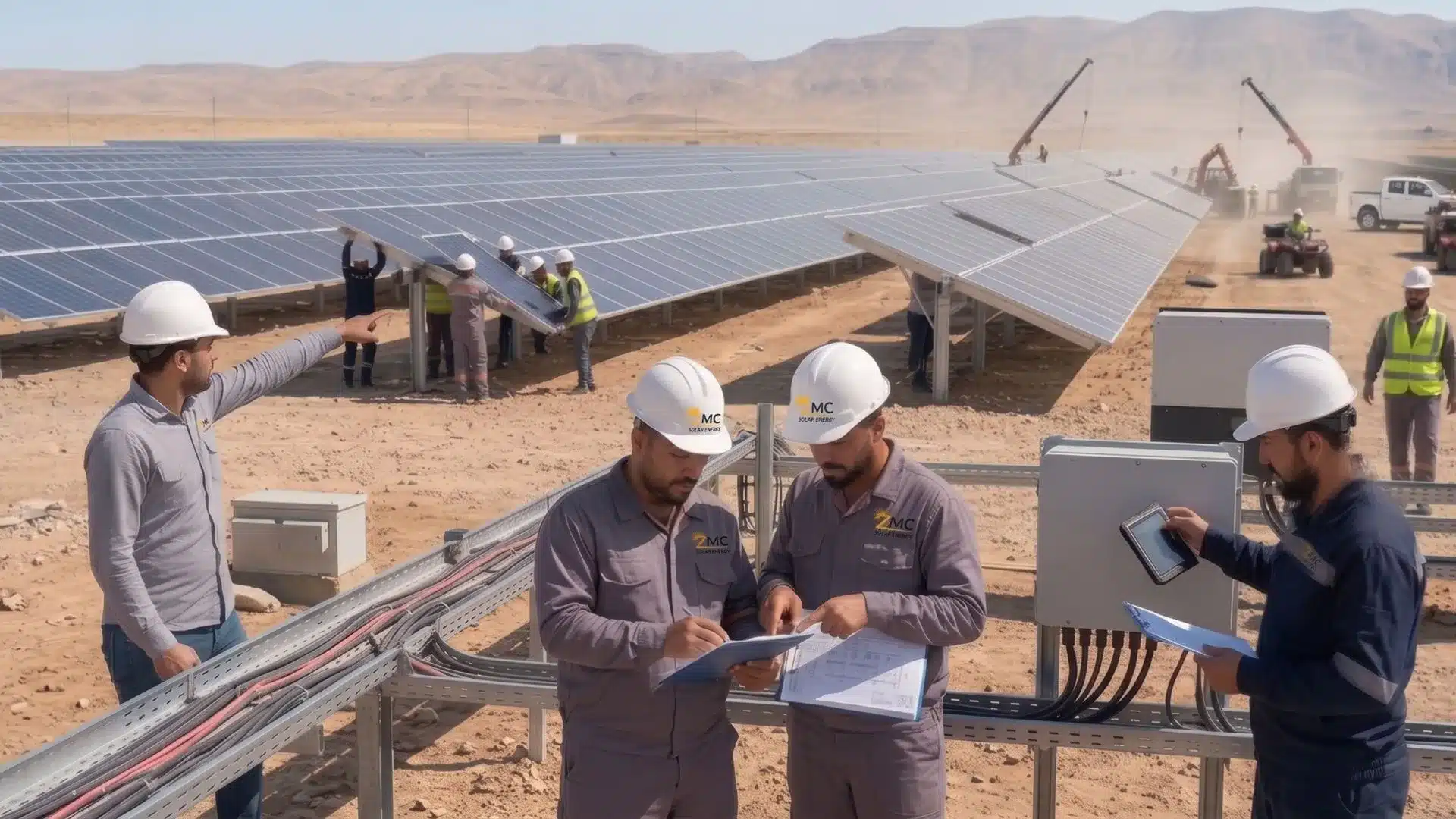
ZMC Solar engineering crews install mounting structures, panels, cabling, inverters, and battery storage. Work is supervised and quality-checked at every stage against the engineering design.
Commissioning & Handover
Full system testing against projected yield. Monitoring platform activated. Client team trained on system operation. Warranty documentation issued. Ongoing support from our Baghdad and Erbil offices.
Tier-1 Equipment on Every ZMC Solar EPC Project
Every commercial solar EPC project ZMC Solar delivers uses internationally certified Tier-1 equipment from brands we officially distribute in Iraq. As the official distributor, we hold local warehouse stock in Baghdad and Erbil, which means your project equipment is available immediately, with no import lead time and no risk of counterfeit or grey-market products entering the supply chain.

Canadian Solar
N-Type TOPCon technology engineered for high-temperature performance — critical in Iraq's 50°C+ summers. Bifacial modules capture reflected ground radiation for up to 30% additional output. Industry-leading low thermal coefficient ensures minimal efficiency loss as temperature rises.

itel
Hybrid inverters designed for Iraq's grid instability — seamlessly managing solar input, battery storage, and grid or generator backup. Lithium Iron Phosphate (LiFePO4) battery systems built for Iraq's heat, with cycle life that far exceeds conventional lead-acid alternatives used in older installations.

DYQUE
Integrated power conversion and high-capacity lithium storage in a single ruggedised unit. Ideal for commercial projects requiring large-scale battery backup without multiple separate components. Designed and tested for demanding climates, specifically suited to Iraq's desert operating conditions.
Commercial Solar EPC Pricing in Iraq — What Determines Your Project Cost
Project pricing — custom engineered per client
System size (kW or MW)
Determined by your facility's electricity consumption profile — daily kWh usage, peak demand, and seasonal variation across summer and winter loading.
Building type and roof structure
Flat concrete roofs, sloped roofs, ground-mounted systems, and carport structures all have different mounting requirements and structural engineering costs.
Battery storage capacity
The amount of lithium storage required depends on how many hours of grid-independence you need — a hospital with zero-failure requirements needs significantly more battery than an office building with flexible backup tolerance.
Inverter configuration
Single large inverter vs multiple string inverters, hybrid vs on-grid only — determined by your load profile, battery requirements, and grid connection status.
Site conditions and access
Roof height, load-bearing capacity, existing electrical infrastructure, and site access all affect installation complexity and timeline.
Location in Iraq
Logistics and installation costs vary between Baghdad, Erbil, Basra, and other provinces. ZMC Solar operates across all major Iraqi cities.
What ZMC Solar can confirm: for every commercial project we have delivered in Iraq, the monthly fuel and electricity savings exceed the monthly loan repayment, meaning the system pays for itself from the first month of operation when financed through the Central Bank programme. The exact saving depends on your current generator fuel cost, which varies by facility size and operational hours.
Contact our engineering team for a free site assessment. You will receive a full itemised proposal including system size, equipment specification, projected monthly energy production, estimated savings against your current energy cost, and a payback calculation specific to your facility.